
Santa Cruz Previous Resident Sources
Each era source answers a different question. The Recorder’s index is strongest for recorded parties and instruments. Directories and census schedules are better for listed household members. Maps and permits explain a physical change. Obituaries and probate can close a trail or connect a deceased resident to heirs. For previous residents, the date span in the table is a coverage guide, not a promise that every year or every address survives.
| Source | Years It Covers | Where Held | What It Shows |
|---|---|---|---|
| Online official-record index | 1978-present | Santa Cruz County Recorder web inquiry | Indexed parties, roles, document type, date, and document number |
| Manual grantor and grantee books | Pre-cutoff, series-dependent | Recorder, archives, or cataloged microfilm | Earlier ownership links and handwritten name entries |
| Polk city directories | Most years 1910-1988 | Santa Cruz Public Libraries, State Library, and scans | Listed adults, occupations, and addresses |
| Haines reverse directories | Selected years 1977-2015 | Santa Cruz Public Libraries local history | Address-to-listed occupant or subscriber clues |
| Federal census | 1850-1950 public schedules | NARA, libraries, and genealogy databases | Household members, ages, relationships, and occupation fields |
| Sanborn fire-insurance maps | 1886, 1928, and other cataloged editions | Library of Congress and libraries | Footprint, construction, use, and old numbering context |
| Building permits | City or county coverage varies | City Planning/Building or County CDI | Project dates, applicants, contractors, and physical change |
| Newspapers, obituaries, and probate | Title and case-series dependent | SCPL, CDNC, court, and archives | Life events, addresses, heirs, and later conveyance clues |
The broadest local record story begins in 1850, but access changes over time. Online Recorder indexing begins in 1978, while the office describes a digitized corpus back to 1850 and handwritten indexes before 1974. The right fallback depends on the year and record type.
Start With Today’s Santa Cruz APN
A backward search for previous residents should begin with the parcel, not with a guessed former resident. Enter the street number and base street name in the Santa Cruz County Parcel Lookup, or use the APN if it is known. Omit Avenue, Street, or Boulevard from the address query. Save the APN, situs address, assessment facts, and any parcel map reference before moving to the owner step.
The web result does not publish the owner. California’s owner-information restriction means the current assessment-roll owner and tax mailing address come from the Assessor by telephone or counter. A different mailing address may reflect a trust, agent, tax destination, or another property. It does not by itself identify the person living at the situs.
The official Recorder portal is the next handoff after the parcel has been identified.
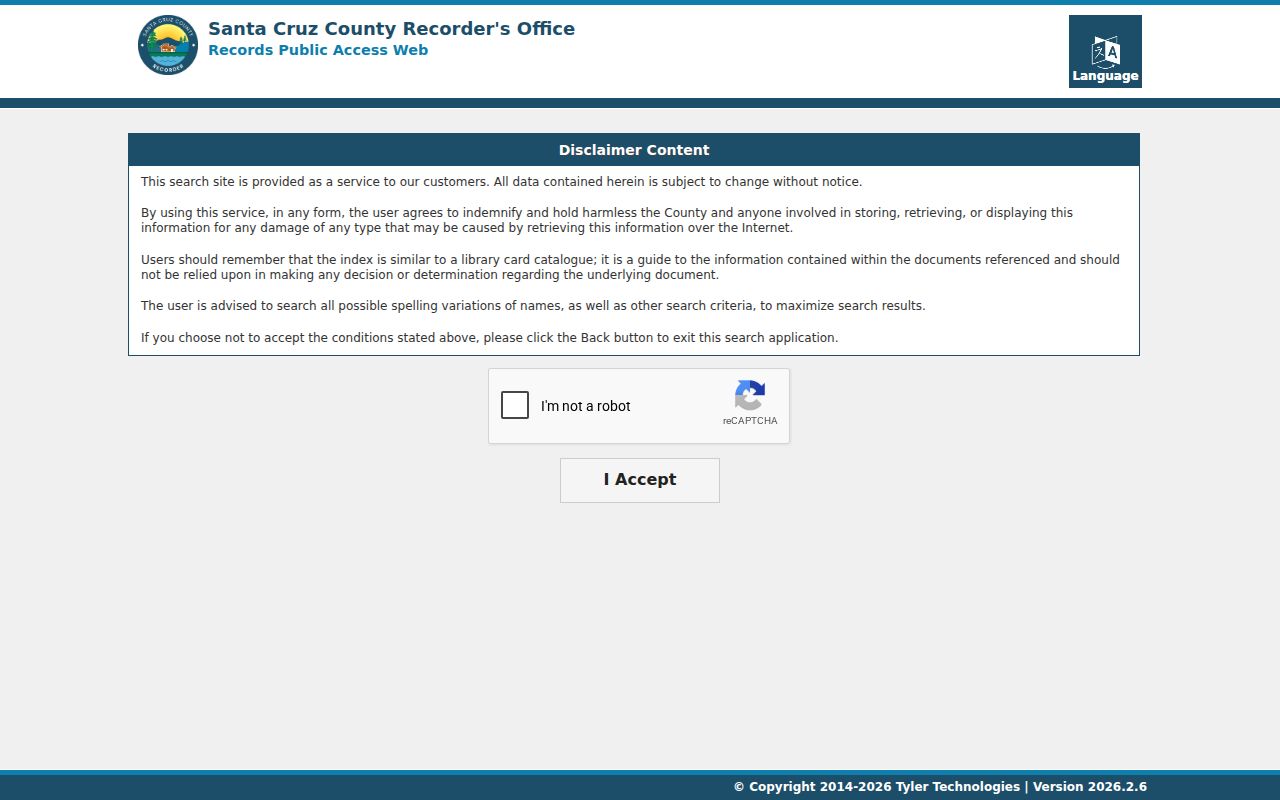
The index capture shows why a parcel key and a recorded-party search work together. The web inquiry is a name and instrument index, not a ready-made list of everyone who occupied an address.
- APN
- The assessor parcel number for the land. It is the stable starting key when a postal address changes.
- Situs
- The physical parcel location used by mapping and permit systems.
- Legal description
- The recorded lot, block, subdivision, or metes-and-bounds description that keeps older documents tied to the correct land.
- Chain of title
- The sequence of recorded transfers and related instruments that connects one title holder to an earlier one.
Walk the Santa Cruz Deed Chain
The Recorder’s official-record inquiry searches party names, document number, or document type/title with a required date range. Start with the current owner as grantee, which is the party receiving the deed. Identify the acquisition instrument by the legal description or APN, then search the grantor as an earlier grantee. Repeat the link backward. For previous residents, title history is only one layer. The document type matters: a deed of trust, reconveyance, lien, quitclaim between co-owners, or trustee deed should not be read as an ordinary sale without examining the instrument.
- Anchor the parcel. Keep the current APN, legal description, situs, and map reference together.
- Find the acquisition. Search the current owner as grantee in the online index from 1978 forward, using name variants and a date range.
- Read the parties. Record grantor, grantee, recording date, document type, document number, and the legal description or APN reference.
- Step backward. Search the prior grantor as grantee in an earlier period and verify that the same land is described.
- Leave the web cutoff. Ask for manual books, deed books, microfilm, or a research/copy route when the needed year is not in the online index.
The Recorder’s own instructions explain the difference between online indexing and older search methods.
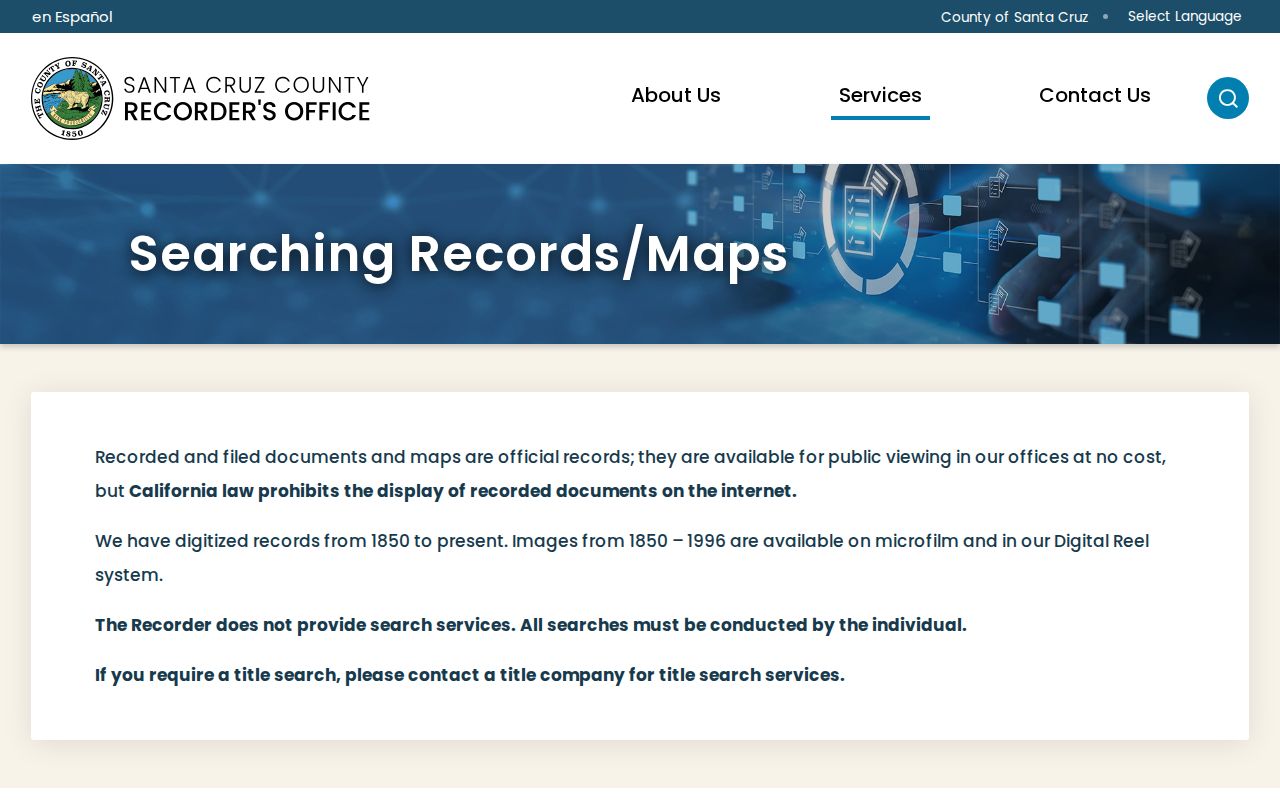
Use a certified copy or the underlying instrument when a precise title fact matters. An index entry can point to a record without showing every clause or restriction.
Before 1974 Santa Cruz Index Books
Santa Cruz County recording begins in 1850. The Recorder describes the official corpus as digitized from 1850 to the present, but public online indexing starts in 1978. Images from 1850 to 1996 are also available through microfilm or Digital Reel channels, while pre-1974 indexes are handwritten and office-only to examine. Manual grantor and grantee books, archives, FamilySearch catalog entries, and the Recorder counter are the fallback when a name is too early for the web.
Name conventions can hide a deed even when the document exists. The 1974-90 era abbreviates the first word and other terms. From 1990-99 the first word is preserved while later terms are abbreviated. From January 1, 2010, terms are not abbreviated and party-list assistance helps with variants. Search a known name more than one way and keep the era’s convention beside the result.
The Recorder’s office history and service channel help identify the right custodian for an older book.
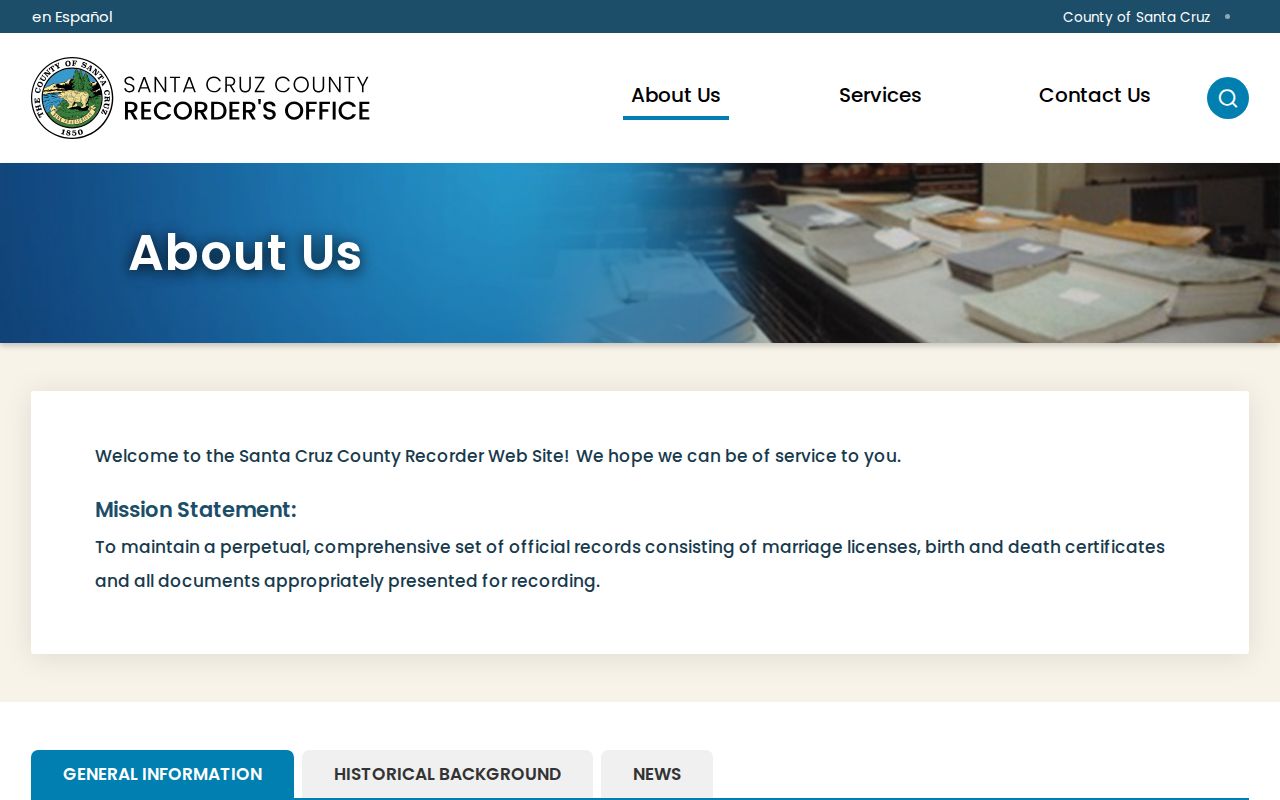
Older records are not necessarily missing because they are absent from the web. A change in index practice, office name, image channel, or series can explain the gap.
Insider tip: The 1850 digitization claim describes the corpus, while 1978 describes the public web index; those are different access statements.
Polk and Haines Address Clues
Deeds identify title holders. Directories identify listed adults, householders, businesses, or subscribers. Santa Cruz Public Libraries Local History is the first local stop for Polk volumes, telephone books, newspapers, reverse directories, maps, and reference help. Ask staff to check exact holdings, missing years, shelf or microfilm access, and the difference between an alphabetic city directory and a criss-cross volume.
Polk survives for most years from 1910 to 1988, but the final year should not be assumed from one catalog. Haines reverse directories cover selected years from 1977 to 2015. To invert an address, find the street guide, orient the block by intersections, then read odd and even house numbers. Compare two years. A canvass or publication lag can look like a move.
SCPL’s official Local History service also points to a 1944 City and Chamber street-directory map that can bridge a directory entry and parcel geography. The library’s catalog and reference staff are needed when a year or title is not visible in a broad online search.
Previous residents may appear as a listed adult without a title interest, and a title holder may be absent from the directory. Record the role printed in the volume instead of upgrading a listing into proof of occupancy.
Pair Santa Cruz Directories and Census
A directory offers a near-annual address snapshot in some eras. The federal census offers a ten-year household view from 1850 through 1950. Pairing them can show a change among previous residents that a deed will never show, such as a boarder, spouse, child, or adult who shared the address without owning the parcel.
- Choose a directory year. Read the title page, publisher, coverage geography, address entry, and abbreviation key.
- Choose the nearest census. Compare the household around 1940 or 1950, then work backward through earlier public schedules when available.
- Mark the differences. Keep names, ages, relationships, occupations, house numbers, and street spellings in separate columns.
- Corroborate the change. Use a deed, obituary, permit, newspaper item, or probate record before calling a household change a move.
The historical collection itself has separate publishers and year runs, so directory titles should be cited rather than shortened to “the directory.” The Santa Cruz directory book materials explain how to read those collections; the backward-address task here uses them as dated evidence for one parcel.
Sanborn Maps and Number Changes
Old house numbers were not static in a growing city. A later directory may use a number that does not match an 1880s entry even when the structure or parcel is the same. Santa Cruz Public Libraries’ house-history material points researchers to the 1944 City and Chamber street-directory map. Sanborn sheets from 1886 and 1928 can add building footprint, construction, use, and street context.
The Library of Congress Sanborn collection is a discovery route for digitized fire-insurance maps, but the edition and sheet must be checked for the exact place. Pair a map with successive directories, assessor parcel maps, recorded maps, and the legal description. Do not create a single citywide renumbering year when the records do not supply one.
Quirk. When a number appears to move, preserve the old street spelling, cross street, map sheet, APN, and legal description. The parcel can stay constant while the postal label changes.
Maps explain continuity. They do not name every occupant, and a building footprint is not a title record.
Permits, Obituaries, and Probate
Permit history adds a physical timeline. City eTRAKiT serves incorporated Santa Cruz parcels, while County CDI serves unincorporated land that may use a Santa Cruz postal city. A permit result may name an applicant, owner, contractor, project, status, inspection, or date. The role is evidence of a project, not proof that a person lived at the site. Full pre-2010 city detail may require staff research.
Newspapers and obituaries can tie a person to a house, family, organization, or death date. The SCPL historical newspaper index preserves printed misspellings, so search exact names, initials, spouse, street, and date variants, then check the article image or microfilm. Probate can add petitions, heirs, beneficiaries, and later conveyance clues. A probate address is a historical point in time, not a current location.
When a deed chain ends at a deceased owner, the strongest next step is often obituary, cemetery, and probate evidence followed by a later deed. When a household appears without a deed, directories, census, and newspapers may explain the gap in a previous residents trail.
Santa Cruz Fraud Notify Alerts
Santa Cruz County Recorder launched free Fraud Notify on October 1, 2025. A subscriber can register personal or business-name variants and receive an email when a matching instrument is newly recorded. The alert reports index facts such as document number, type, grantor, grantee, and an index link. It does not block a filing, stop fraud, or supply the full document.
Fraud Notify is prospective. It covers new recordings after enrollment, and a common name can produce a false match. Inspect the underlying instrument through the Recorder’s index, counter, kiosk, or purchase channel. If a title concern is real, contact the Recorder and the appropriate county response office rather than treating an alert as a finding about occupancy.
The official alert service gives a useful way to watch future instruments after a backward chain has been built.
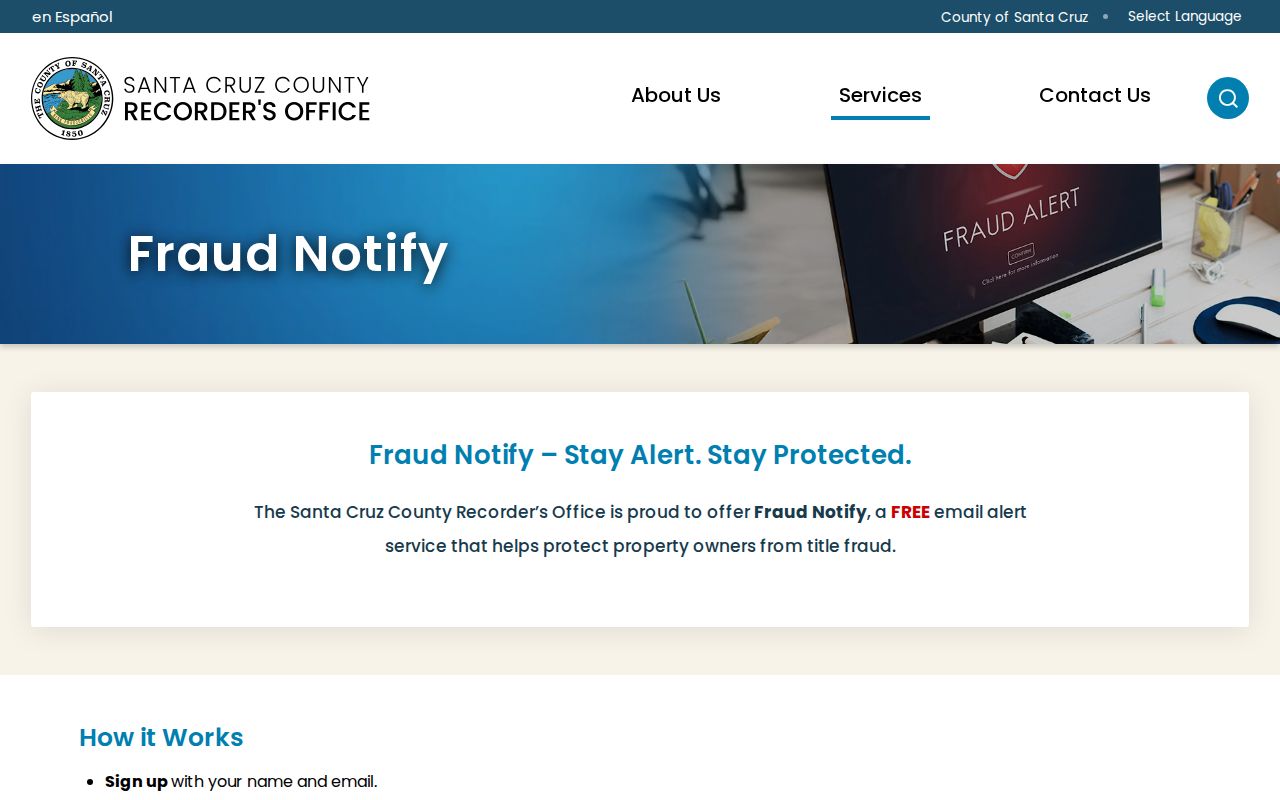
Use the alert as a title-fraud signal and verification prompt. It is not a replacement for the deed, the legal description, or the full chain of title.
Timely: A free alert can reveal a new indexed instrument, but it cannot retroactively cover earlier recordings or confirm that the named party lived at the property.
Santa Cruz Previous Resident Limits
Previous residents research has a clear boundary. The assessment roll and Recorder index can show title-related facts. Directories and census schedules can show listed people. Permits show project roles. Newspapers and probate show life events. None creates a complete list of every occupant, guest, non-owner occupant, household member, or person who used a mailing address.
Protected-address programs, sealed adoption and court records, DMV data, utility accounts, and private subscriber information leave lawful gaps. A focused California Public Records Act request may seek an existing, identifiable, nonexempt city or county record, but CPRA cannot force an agency to create a list of prior residents. Ask the named custodian for the proper request or copy route.
Lawful personal use. Use a Santa Cruz house history for genealogy, preservation, heir research, and personal curiosity. Do not use previous residents records to stalk, harass, track, intimidate, or harm a living person, and do not treat a public address clue as permission to contact someone.